Local Weather: Forecast&Alerts
- 4.4
- Rating
- 100.00K
- Installs
- Free
- Price
 Analysis by App-foxy
Weather apps are easy to overlook until you need one at the exact right moment. I tested Local Weather: Forecast&Alerts with that practical question in mind: can it help me understand current conditions and make a decision without turning a simple forecast into a chore? My overall impression is that it is a straightforward weather app from Muheb Bangash, aimed at people who want local information and alerts in one place rather than a crowded dashboard.
It is free, rated for Everyone, and available for devices running Android 7.0 or later. The current release is version 1.1.2, while the app has passed the ten-thousand-install mark and holds a 4.6 average from roughly fifty-five ratings. Those figures suggest a small but positive user base, so I would treat it as a focused option worth trying rather than as a long-established replacement for every major weather service.
How Local Weather: Forecast&Alerts handles everyday weather checks
I find a local weather check most useful when it answers a decision, not just a curiosity: whether to leave now, change an outdoor plan, or pay attention to a warning. This section looks at how Local Weather: Forecast&Alerts fits that quick-check role and why keeping the task focused can make a forecast easier to act on. Next, I’ll turn to the practical routine of checking conditions before plans are already underway.
You May Also Like

 Blood Strike: 2.5 Anniversary
Blood Strike’s Loadouts Turn Every Drop Into a Tactical Gamble
A close look at Blood Strike’s custom loadouts: how fast access to signature weapons reshapes its battle royale rhythm, rewards preparation, and narrows the gap between fights.

 Pandora - Music & Podcasts
Pandora’s Music Is Easy to Start, but Harder to Recover
Pandora’s strength is its low-effort path from a seed to a station. Its weak spot is how much confidence it asks you to place in connection, setup, and quiet recovery.

 8 Ball Pool
 Is Built on Rivalries, Rematches, and Routine
A close look at the rivalries, rematches, shared routines, and unanswered safety questions that turn a quick pool match into a persistent mobile community.

 Samsung Music
’s Quiet Strength Is Playing What You Already Own
Its reach comes less from spectacle than from dependable access to a personal library. That simplicity is both the app’s strongest retention engine and its ceiling.

 AccuWeather: Weather Radar
AccuWeather Review: A Quick, Clear Forecast for Everyday Decisions
For everyday plans, the best forecast is the one you can understand quickly. AccuWeather makes rain timing, radar, and local conditions easy to act on, with a few trade-offs.

 Hill Climb Racing
Why Hill Climb Racing Still Turns Crashes Into One More Run
A tiny car, a bumpy hill and one more upgrade: Hill Climb Racing keeps resurfacing because its simple chaos makes every near-miss feel personal.
More From Our News Desk
View All News


Readability and navigation
The strongest part of the experience is its basic purpose. Local Weather: Forecast&Alerts is built around the information I normally want first: what the weather is doing locally, what may happen next, and whether an alert deserves attention. That focus matters because many weather apps surround the forecast with maps, news, lifestyle cards, advertisements, and extra panels. A simpler layout can make the first check less tiring, especially when I am standing at a doorway or trying to leave on time.
I found the app most useful when I approached it with a specific question instead of browsing aimlessly. Before walking somewhere, I would check whether conditions looked manageable. Before planning an outdoor task, I would look for a change that might affect the timing. This kind of short interaction suits the app better than treating it as a complete weather workstation.
Clear information hierarchy is more valuable than a crowded screen in a weather tool. The app’s local focus gives it a sensible starting point: the user should not have to decode several unrelated sections before finding the forecast. For someone with limited attention, reading fatigue, or a preference for predictable routines, that directness can be a genuine advantage.
There is also a useful distinction between checking a forecast and reacting to an alert. A forecast supports planning; an alert asks for attention now. Keeping those purposes mentally separate helps me avoid overreacting to ordinary changes while still taking a warning seriously when it appears. Users who prefer a calm, uncluttered weather check may appreciate that approach.
At the same time, I would not describe the navigation as ideal for every reader without qualification. Weather information contains compact terms, changing values, and time-based details. Even when the screen is organized sensibly, a person who needs very large text, strong contrast, or generous spacing may still find a standard weather interface demanding. The app is easier to use when I slow down and check one item at a time rather than scanning everything at once.
My practical tip is to establish a consistent checking routine. I would look at the local forecast once when planning the day, then use alerts as a reason to reassess rather than repeatedly refreshing. That reduces the mental load of comparing small changes and makes the app more useful for people who prefer clear, repeatable habits.
Motor and sensory considerations
Weather apps are often used with one hand, outdoors, or while moving between tasks. That makes touch accuracy and visual simplicity more important than they may seem. Local Weather: Forecast&Alerts works best for a user who can comfortably tap through a conventional mobile interface and read changing forecast information on a phone screen. I would not choose it on the assumption that it replaces a dedicated accessibility tool.
For users with limited dexterity, the best workflow is to avoid unnecessary exploration. Open the app, identify the local conditions, read the forecast, and leave. Repeatedly opening secondary areas or trying to manage several locations can add effort, particularly for anyone who relies on slower, more deliberate gestures. A short routine is less frustrating than treating every visit as a full session.
People with low vision may need to adjust their device’s display settings before using it comfortably. Larger system text, magnification, or a stronger contrast setting can help, but the result depends on how the app responds to those changes. I would test the screen at the size I actually need before relying on it for urgent weather decisions.
Users with color-vision differences should also avoid interpreting color alone. Weather interfaces commonly use colors to distinguish conditions or urgency, but the safer habit is to read the accompanying words and values. An alert should be understood from its text and context, not from a red, orange, or yellow visual cue by itself. That is a good general practice here because weather decisions should not depend on one sensory signal.
For people who are sensitive to interruptions, alerts require a personal balance. The point of an alert is to bring attention to a meaningful change, but any notification can break concentration or increase anxiety. I would keep alerts available if timely warnings are important, while checking the phone’s notification controls so the interruptions fit my daily routine. Someone who finds unexpected sounds or vibrations difficult may prefer a quieter notification setup and manual checks when possible.
People who are deaf or hard of hearing can still benefit from written weather information, but they should not assume that noticing a notification automatically explains its importance. The useful part is the readable alert content inside the app. I would open the notification and read the details rather than relying on a sound, vibration, or visual badge as the complete message.
Situational access: commuting, planning, and bad-weather moments
The most convincing use case is a normal morning with several small decisions to make. I might be preparing to walk to a bus stop, deciding whether to carry rain protection, and choosing between an outdoor errand and an indoor one. Local Weather: Forecast&Alerts gives me a single place to check local conditions and look for a warning before I commit to the plan. It does not need to turn that moment into a detailed meteorological lesson; it needs to help me make a sensible choice quickly.
That same workflow can help caregivers, older adults, and people managing fatigue. A person who does not want to interpret multiple charts can check the local outlook, decide whether the day requires extra preparation, and move on. A family member could also use the app as part of a shared routine: check conditions before a school journey, outdoor appointment, or longer walk, then revisit the forecast if an alert changes the situation.
For neurodivergent users or anyone who prefers predictable planning, weather information can reduce uncertainty when presented in a repeatable way. I would use the app at fixed points in the day instead of constantly monitoring it. That approach turns the forecast into a planning aid rather than another stream of information demanding attention.
Travel is a more complicated case. A local weather app can be useful before leaving home, but a person moving between areas should be careful to confirm that the displayed location is the one that matters. Local conditions can change quickly across a city or region, and a forecast for home may not represent the destination. For a day trip, I would check the destination separately and avoid assuming that one local view covers the whole route.
Outdoor workers may find the app helpful for quick checks before starting a task, especially when an alert could affect timing. However, I would not use a phone forecast as the only basis for a high-risk decision. If work depends on precise conditions, official emergency communications or a specialized service may be more appropriate. The app is a convenient decision aid, not a substitute for professional safety procedures.
In poor visibility, bright sunlight, rain, or cold weather, situational access becomes its own issue. A screen that is easy to read indoors may be harder to interpret outside. I would check the forecast before stepping into those conditions, keep the interaction brief, and avoid relying on a tiny on-screen detail while walking. This is where the app’s focused purpose helps, but the environment still sets practical limits.
Where the experience still has barriers
The biggest limitation is that a focused weather app cannot remove the complexity of weather itself. Forecasts change, alerts require interpretation, and local information may not answer every question about a wider journey. I like having a direct tool for a quick check, but I would still want another source when I need radar-style context, detailed travel planning, or a broader comparison between locations.
That trade-off is important when comparing it with usual alternatives. A built-in phone weather panel may be faster for someone who only wants the current temperature or a glanceable forecast. A large weather platform may be better for maps, long-range planning, severe-weather detail, or multiple saved places. Local Weather: Forecast&Alerts makes more sense for the middle ground: a dedicated local check with forecast and alert functions, without requiring me to navigate a much larger information system.
Users who depend on advanced accessibility controls should approach it carefully. I would test text scaling, screen magnification, touch targets, and notification behavior on the specific device before deciding that it fits. The fact that the app is rated for Everyone makes it broadly approachable in age terms, but an age rating does not guarantee that every visual, motor, hearing, or cognitive need is covered.
Another barrier is attention management. Alerts are useful only when they are understandable and appropriately timed. Too many interruptions can make a person ignore all notifications, while too few checks can leave them unprepared. I recommend deciding in advance what an alert should change in your plan. If the answer is nothing, a manual forecast routine may be less stressful. If the answer is “delay the walk,” “change the route,” or “prepare different clothing,” the alert has a clear purpose.
There is also a trust issue that comes with a relatively modest user base. The positive 4.6 average is encouraging, but it is drawn from only around fifty-five ratings and one written review. I would therefore judge the app by a short personal trial rather than assuming that the rating proves it will suit every device or routine. Install it, check whether the local view is comfortable to read, and see whether its alerts fit your tolerance for interruptions.
Finally, people who need exact information for medical, travel, emergency, or professional reasons should keep a second source available. A convenient app can support a decision, but it should not be the sole authority when the consequences of a wrong interpretation are serious. That is not a criticism unique to this app; it is a sensible boundary for any general-purpose weather application.
Who should use it, and who should skip it
I would recommend Local Weather: Forecast&Alerts to someone who wants a free, local weather app with forecast and alert capabilities, especially if a quick, focused check is more appealing than a feature-heavy weather portal. It is a reasonable fit for daily planning, commuting preparation, outdoor errands, and simple household routines.
I would also suggest it to users who become distracted by news feeds, maps, and extra weather content. A narrower purpose can be a strength when the goal is simply to understand the day and notice an important change. The app’s Everyone rating also makes it suitable for a broad household audience in terms of age classification, although individual accessibility needs still deserve a hands-on test.
I would skip it if my main requirement were advanced visual weather analysis, extensive travel planning, or a highly specialized accessibility experience. In those situations, a larger weather service or a tool designed around the specific need would likely be a better choice. I would also look elsewhere if I needed a mature ecosystem with extensive customization and a long history of user feedback.
One useful way to decide is to compare the app with the weather tool already on the phone. If the built-in option gives me enough information and is easier to reach, installing another app may not add much. If I want a separate local-weather routine and alerts are central to how I plan, this app has a clearer reason to exist.
My inclusive verdict after using it
Local Weather: Forecast&Alerts is a practical weather app with a clear everyday role. I like it most as a quick local checkpoint: open it, understand the conditions, consider the forecast, and respond to an alert when one matters. Its value is less about overwhelming me with detail and more about helping me make small decisions with less uncertainty.
From an inclusion perspective, its focused purpose can support people who benefit from short, repeatable interactions, including users managing fatigue, attention, or information overload. It can also work well for older family members or anyone who wants weather information without a complicated dashboard. The experience becomes less certain for people who require specific text, contrast, touch, notification, or assistive-technology behavior, so I would test those needs directly on the intended phone.
My final recommendation is measured but positive. I would try Local Weather: Forecast&Alerts if I wanted a free local forecast and alert tool that stays close to the basic job. I would keep a second source for important travel, emergency, or professional decisions, and I would adjust my phone’s display and notification settings before judging its comfort. For a simple daily weather routine, it is a sensible option; for advanced analysis or demanding accessibility requirements, a more specialized alternative may serve me better.
FAQs for Local Weather: Forecast&Alerts
01What features does Local Weather: Forecast & Alerts offer?
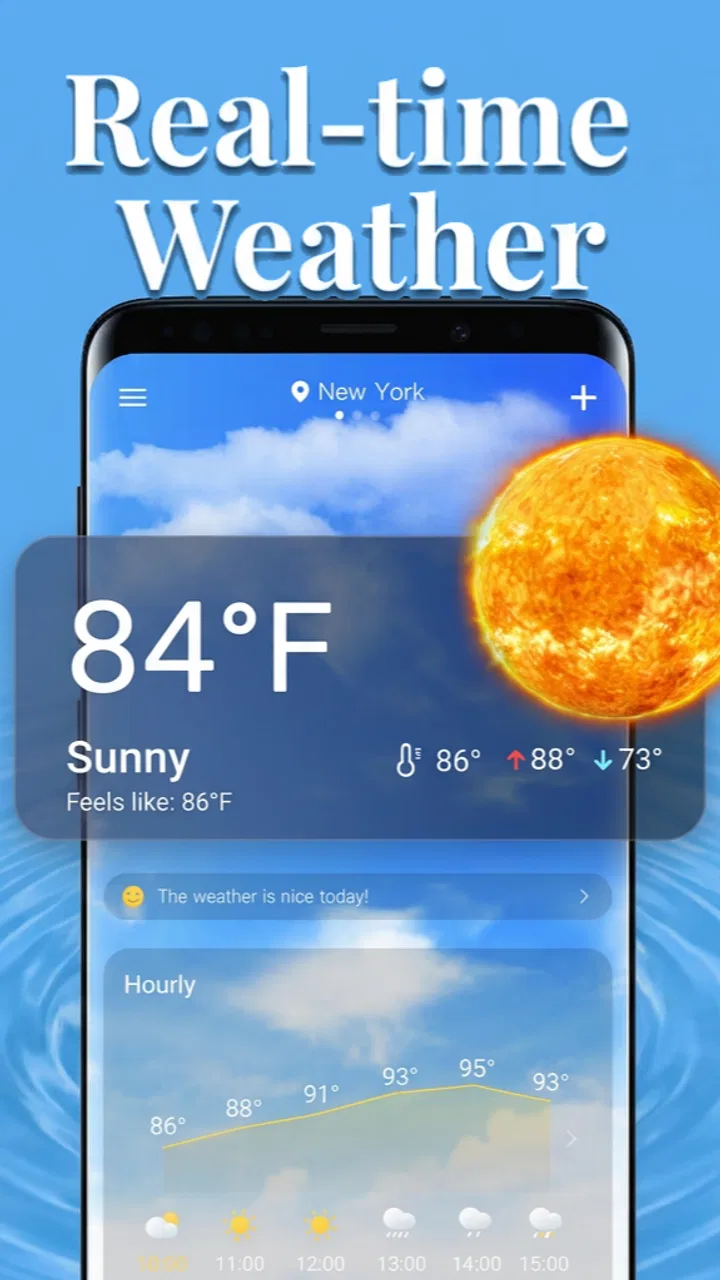
Local Weather: Forecast & Alerts provides real-time weather updates, detailed forecasts, and severe weather alerts. Users can access hourly and weekly forecasts, view interactive radar maps, and receive notifications for critical weather changes. The app also offers customization options for units of measurement and personalized weather reports based on location.
02Is Local Weather: Forecast & Alerts free to use?
Local Weather: Forecast & Alerts offers a free version with basic features, including daily weather updates and forecasts. However, a premium subscription is available, providing additional features such as ad-free usage, advanced radar options, and more detailed forecast data. Users can choose according to their needs and budget.
03How accurate is the weather information provided by the app?
The app sources its data from reputable meteorological services and utilizes advanced algorithms to provide accurate weather forecasts. While no weather app can guarantee 100% accuracy, Local Weather: Forecast & Alerts is known for its reliability and precision, helping users plan their activities with confidence.
04Can I set up multiple locations in Local Weather: Forecast & Alerts?
Yes, the app allows users to track weather conditions for multiple locations. This feature is particularly useful for those who travel frequently or want to keep an eye on weather conditions in different areas. Users can easily add, remove, or switch between locations within the app.
05Does the app send alerts for severe weather conditions?
Local Weather: Forecast & Alerts sends timely notifications for severe weather conditions, including storms, hurricanes, and extreme temperatures. Users can customize alert preferences to ensure they receive crucial updates without being overwhelmed by less critical notifications. This feature enhances safety and preparedness for adverse weather events.
Pros
- Accurate real-time weather updates.
- User-friendly interface and navigation.
- Customizable alerts for severe weather.
- Detailed daily and hourly forecasts.
- Supports multiple locations tracking.
Cons
- Ads can be intrusive occasionally.
- Limited widget customization options.
- Premium features behind a paywall.
- Some features require constant internet.
- Battery usage can be high with GPS.

Local Weather: Forecast&Alerts
Gallery